
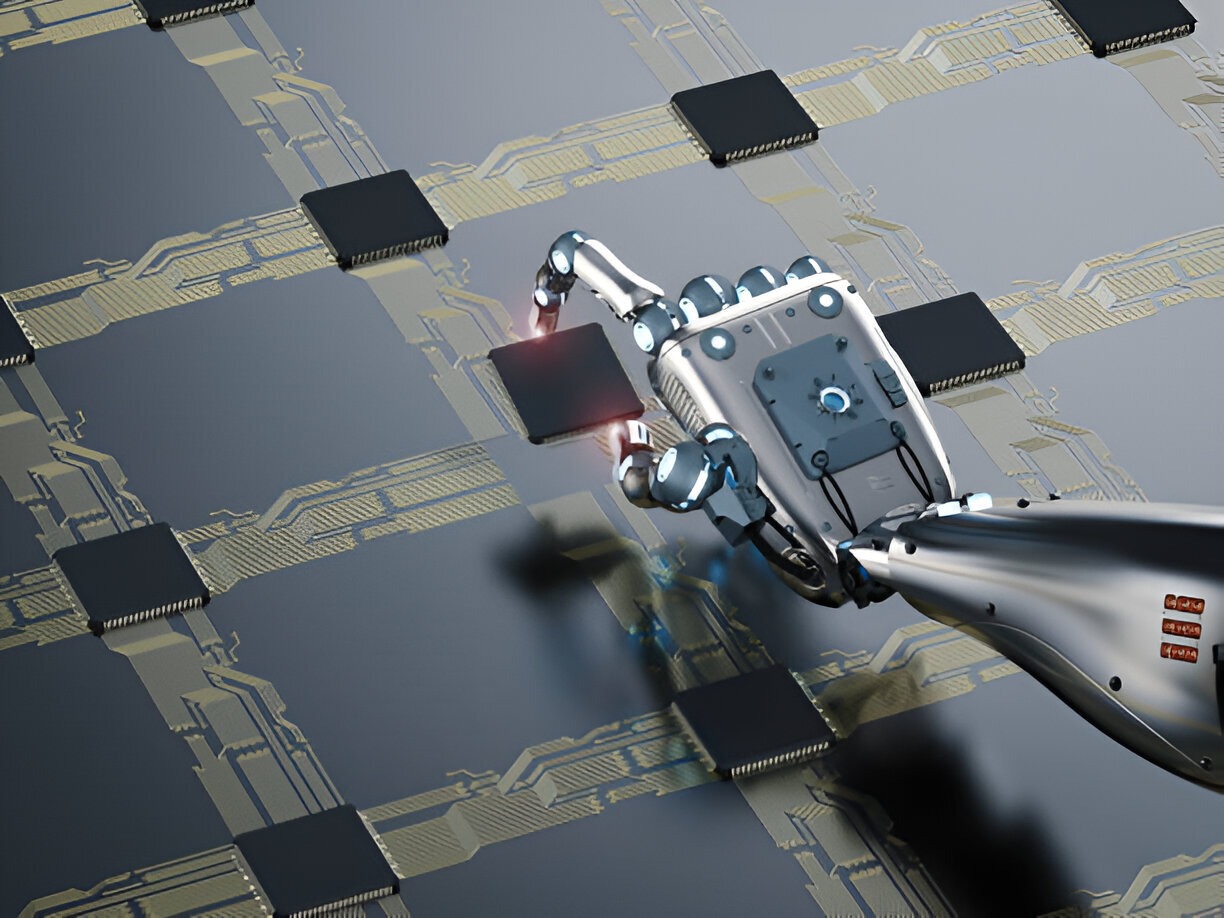
Web development technology is changing in fast forward and one of the most important driving forces behind that is Artificial Intelligence (AI). Because of the constant evolution of technology, AI is a vital and robust tool for appro web engineers today, helping them improve the end-user experience and automate monotonous tasks. Hence, in this blog we will explore how web developers can leverage AI to create smart and efficient websites.
1. AI in Web Design: Automating and Enhancing Creativity
Web design plays a key role in web development; AI is shaping how designers perform their tasks. This allows developers to create sites that are attractive yet highly functional with a visitor-centric design.
- AI-Powered Design Tools
AI-powered design tools like Wix ADI (Artificial Design Intelligence) and Adobe Sensei help developers design excellent websites with a minimal of effort. While some of these services combine machine learning capabilities, they automatically generate design layout, color palettes, and, in some cases, even recommendations for content based on user inputted data (such as a business area, preferences, or content). It also allows developers to more quickly build sites without sacrificing design quality.
AI tools, for instance, can suggest design aspects that can align with the behavior of users or the trends of the industry to build an online store that is capable of being not just visually appealing but also up to date with design standards. - Personalized User Experiences with AI
One way AI imparts great value to web design is through personalized user experiences. With AI you can evaluate on users behavior and adjust website contents in real-time. This includes things like recommend personalized products, dynamic content and layouts tailored to how a user reacts on the site.
AI can pull in this data to recommend upselling or complementary products (e.g., e-commerce websites recommend products based on the user’s browsing history) which increases the chances of conversions. News services can also serve users contextually relevant content when they use the site so that their likes are taken care of and the most significant articles and stories are made visible to them.
2. AI for Efficient Coding: Automating Repetitive Tasks
Writing code is often time-consuming and rife with human error. And if it is a question of AI-powered tools, it can significantly accelerate the coding lifecycle and minimize errors, meaning developers can use their time on more complex responsibilities that require creative and troubleshooting abilities.
- Code Completion and Autocompletion
AI-based code autocompletion tools — GitHub Copilot, Tabnine, Kite — speed up the coding process for developers. These tools utilize machine learning models that have been trained on huge code bases to anticipate what the developer is attempting to write next and provide suggestions in real-time. This saves a lot of time in writing repetitive code and minimizes errors by easing that the syntax is not incorrect.
For instance, when building a form for a website, an AI tool can prompt code snippets to identify the correct form validation. - Code Refactoring and Error Detection
AI can also help you identify code problems that maybe aren’t immediately obvious to developers. DeepCode and other tools use AI to analyze code and offer suggestions similar in spirit to our idiomatic functions that improve its readability, efficiency, and performance. It can even identify potential security vulnerabilities such as SQL injection or cross-site scripting (XSS), aiding developers in writing cleaner, more secure code.
AI also can help with refactoring, as tools can be used to optimize code for better performance, meaning a website meets their best-practice approaches when loaded and operating.
3. AI in Web Testing: Automating Quality Assurance
Testing is an essential part of the web development process, but it can be time-consuming. AI has made significant strides in automating testing and quality assurance (QA), enabling developers to test websites more thoroughly and efficiently.
- AI-Driven Automated Testing Tools
In website testing, AI testing tools such as Testim and Selenium employ machine learning to automate the process of testing. These tools can mimic user actions, catch bugs, and verify that the site is displayed correctly across a range of browsers and devices. AI-based testing tools can also learn from changes to a site’s design, making sure that the tests stay relevant as the site changes with time.
AI solutions use machine learning algorithms to analyze all major site changes and identify possible issues- for instance, if a developer modifies a webpage layout, AI-driven testing tools can immediately flag ensuing issues like broken links and images, misaligned pictures, layout mismatches, etc., enabling the developer to resolve them well ahead of the site launch. - AI for Performance Optimization
AI can analyze metrics and recommend ways to optimize your website speed which is vital both for a great user experience but also for improving search engine optimization (SEO). AI tools can analyze the loading of websites and point out performance issues big images, unoptimized code, slow server response, etc. This guarantees that the website will run smoothly for its users, irrespective of what device they are using or its internet speed, because AI automatically recommends performance enhancements.
4. AI for Content Management and SEO
Content management and organic SEO (Search Engine Optimisation) is the basic requirement for any website to bring traffic and better user engagement. Meanwhile, AI tools can assist developers in creating, optimizing, and managing content more effectively, therefore improving the website’s visibility and performance.
- AI-Powered Content Generation
AI-powered tools for content creation such as Copy.ai and Jasper (previously known as Jarvis) assistance businesses in producing quality-written material for their own graphics. These tools leverage natural language processing (NLP) models to generate blog posts, product descriptions, landing pages, etc., from user inputs or keywords. AI content creation can help save time and ensure that your website is always up-to-date with fresh relevant information.
For instance, e-commerce websites can leverage AI tools to generate product descriptions automatically from product specifications, ensuring consistency and freeing time for the content team. - AI for SEO Optimization
Learn how to optimize your content with SEO and what AI-powered SEO tools like Clearscope and Surfer SEO can do. But there are tools that leverage machine learning algorithms to learn the performance of certain keywords, and are able to tell us what content has a higher ranking rate.
Furthermore, AI can optimize on-page SEO elements such as meta tags, headings, and alt text for images, by ensuring that the website is fully optimized for search engines.
5. AI in Chatbots and Customer Support: Enhancing User Interaction
Websites are gearing towards AI-powered chatbots, allowing users to connect with a virtual assistant and provide services to customers in real-time. Natural language processing (NLP) and machine learning allow these chatbots to answer common customer queries independently.
- AI-Powered Customer Support Chatbots
AI chatbots Websites spend on customer support to provide help and interaction in a personalized manner with customers using AI like Intercom, Drift and Zendesk. These chatbots can respond to frequently-asked inquiries, provide navigation assistance on the website, and even help in processing orders or set appointments. By learning from conversations with users, these chatbots will continue to improve over time, leading to increased customer satisfaction and a reduced reliance on human support.
The chatbots can respond to the questions instantly and save time for the users leading to a better customer experience.
6. AI for Web Security: Protecting Websites from Threats
Websites are gearing towards AI-powered chatbots, allowing users to connect with a virtual assistant and provide services to customers in real-time. Natural language processing (NLP) and machine learning allow these chatbots to answer common customer queries independently.
- AI-Powered Customer Support Chatbots
AI chatbots Websites spend on customer support to provide help and interaction in a personalized manner with customers using AI like Intercom, Drift and Zendesk. These chatbots can respond to frequently-asked inquiries, provide navigation assistance on the website, and even help in processing orders or set appointments. By learning from conversations with users, these chatbots will continue to improve over time, leading to increased customer satisfaction and a reduced reliance on human support.
The chatbots can respond to the questions instantly and save time for the users leading to a better customer experience.
6. AI for Web Security: Protecting Websites from Threats
For web developers, website security is a significant priority, and AI can be used to protect websites against cyber threats and attacks. AI tools can identify flaws, search for unusual behaviour and shield websites against unwanted access.
- AI in Threat Detection
Security tools based on AI employ machine learning to detect potential security threats, including hacking attempts, malware, and phishing attacks. Data up to October 2023 has been used for training — Having the ability to assess website traffic and user behavior, AI can identify unusual occurrence patterns, which may suggest that an attack is in progress. This gives developers the opportunity to act before any harm is done.
Furthermore, AI is beneficial for web application firewalls (WAFs) to automatically black most of the malicious traffic trying to access sensitive data.
Conclusion: The Future of AI in Web Development
AI in Web Development AI changs web development, allowing developers to develop intelligent and efficient websites. AI tools are enabling developers like you to build websites that provide personalized user experiences and high performance—from design to coding and everything in between. No doubt, as AI technology evolves, it will play a much more pivotal role in the future of web development.
By leveraging AI, web developers can take their processes to the next level and create engaging sites more quickly than ever before. So, whether an expert in web development or a novice, incorporating using AI in the web development process will surely have you in the competitive aspect of the emerging digital world.